“When We Fight, We Win” – From Honolulu to Toronto, IFPTE Locals, Members Participate in Labour Day Festivities
IFPTE members and Locals across North America participated in Labor Day events in their local communities to celebrate and honor working families. Among the many Locals that represented IFPTE strongly at Labour Day gatherings and marches were Local 121 at the Hawaii Labor Unity Picnic in Waikiki; the Society of United Professionals (SUP/IFPTE Local 160) at Toronto’s annual Labour Day parade, and Locals 1921 and 29 at Greenbelt, Maryland’s annual Labor Day parade.
SUP President, Rebecca Caron, Joins Letter Calling on Ontario Gov’t to “Improve Safety in Courtrooms Across the Province
In response to the tragic and fatal shooting that occurred on July 31st at the youth centre on Wapekaka First Nation during court proceedings, Society of United Professionals (SUP/IFPTE Local 160) President Rebecca Caron joined Ontario Public Service Employees Union (OPSEU) President, JP Hornick, and Ontario Crown Attorney’s Association President, Donna Kellway, signed a joint letter urging Attorney General Doug Downey to take immediate action to, “prevent further risks to the health and safety of courthouse staff, the judiciary, counsel, justice system participants, and the public.”
Hands Off TVA! – Secretary-Treasurer Henson Addresses TVA Board, Talks to Valley Labor Report on Labor’s Fight to Keep TVA Serving the Public, Not Profits
Over the August recess, IFPTE Secretary-Treasurer Gay Henson and Engineering Association (EA), Local 1937 President, Anthony Chorney, lead IFPTE’s fight against rumored interest by the Trump Administration to consider privatizing the Tennessee Valley Authority (TVA). Henson, who is the former longtime president of the Engineering Association (EA), Local 1937, and a 38 year employee of TVA and who attended a TVA board a TVA board meeting on August 20th along with Chorney, testified to board members that, “Selling TVA to a profit-making entity would have disastrous consquences for the region, TVA customers, TVA’s beautiful and well-cared for natural resources, the region’s economic growth and every single person who lives and works in the Valley.”
SPEEA’S WTPU Unit Prepares for Negotiations with Spirit AeroSystems
SPEEA’s Wichita Technical and Professional Unit – or WTPU — is moving forward in its preparations for upcoming contract negotiations with management at Spirit AeroSystems. Council Reps in Wichita in August elected five people to serve on the WTPU bargaining team: Patti Brinkmeyer, Emily Forest, Wes Gardner, James Hatfield, and Cathy Yeager. In addition, the WTPU Contract Action Team – made up of activists from among the ranks of dues-paying SPEEA members in Wichita — has begun meeting to discuss ways to support negotiations.
IFPTE Canadian Locals Gather in Winnipeg for Semi-Annual Meeting of CCL
TEAM/Local 161 and WAPSO/Local 162 welcomed leaders from sister Canadian IFPTE Locals, the Society/Local 160, and SCMMA/Local 222, to Winnipeg for the Council of Canadian Locals’ second meeting of the year, occurring on August 22nd. The Local leaders were joined by special guest Ian Cantello, President of the Regina Civic Middle Management Association (RCMMA), as well as IFPTE President Matt Biggs, who attended virtually, and IFPTE Canadian Area staff.
IFPTE Members Attend John Garrity’s Homegoing Celebration
Our Union Brother and former Local 3 President, John Garrity, sadly passed away on August 19 at his home in Delaware after a long bout with cancer. IFPTE offered our deepest condolences to his wife, MaryJo, their three children, the Garrity family, and the Local 3 family. IFPTE International Representative, David LaFemina, and President, Matt Biggs, attended his funeral and served as pallbearers last Thursday in Newark, Delaware. Brother LaFemina also delivered John’s eulogy.
Sherrod Brown Earns IFPTE’s Endorsement for U.S. Senate
IFPTE was proud to endorse our longtime friend, and one of the staunchest supporter of working families and their Unions the United States Congress has ever seen, Sherrod Brown, for the United States Senate. In issuing the endorsement, IFPTE called Brown, who previously served Ohio citizens in both the Senate and the House of Representatives and boasts an unblemished 100% lifetime voting record of approval from the AFL-CIO , “a true friend of workers and unions, and a champion for workers’ rights.”
IFPTE in the NEWS
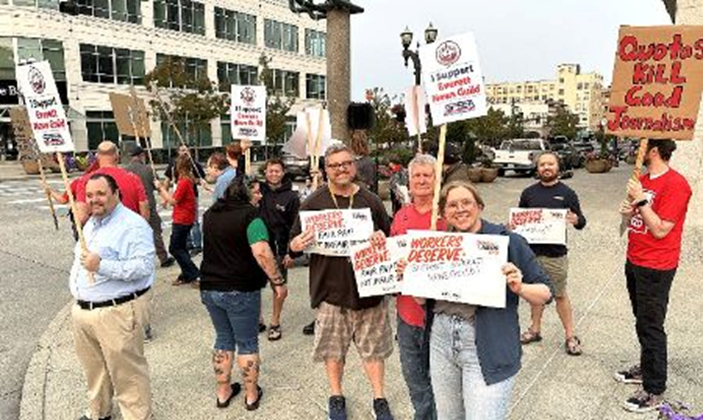
9/5/2025 – The People of Snohomish County Support Us (the STAND)Half-dozen members from SPEEA/IFPTE Local 2001 turned out for informational picketing in support of the Everett News Guild last night. The Local’s E-Board also sent a letter of support.
IFPTE’s Weekly RECAP will be on hiatus until September 5, 2025. For updates, visit IFPTE’s website at ifpte.org [ifpte.org]
IFPTE International Files Unfair Labor Practice – Raises Alarm as Army, DOD Ignore NCR Obligations IFPTE filed Unfair Labor Practice (ULP) charges against the U.S. Department of Defense (DoD) and Department of the Army after identifying over 30 instances where both the DoD and the Army have failed to honor IFPTE’s National Consultation Rights (NCR). Read more…
Local 12 President, Tiera Beachamp, Participates in Washington State AFL-CIO Convention Union leaders from across the state of Washington, including IFPTE Local 12 President Tiera Beauchamp, gathered in Solidarity this week in Vancouver, Washington, at the Washington State AFL-CIO’s 2025 Convention. The Convention theme was Our Voice, Our Power, Our Movement, and included several workshops ranging from how to build strong Union-driven campaigns to legislative advocacy to organizing. Read more…
ORGANIZING ALERT: Carnegie Workers Fight for Voluntary Recognition Over 75 workers at the Carnegie Endowment for International Peace are joining Nonprofit Professional Employees Union (NPEU/IFPTE Local 70) and have been fighting for voluntary recognition of their union since June 17! Read more…
IFPTE Joins Labor Event in Support of Representative Brian Fitzpatrick Federal unions, including IFPTE, sponsored and supported an event in honor of a great friend of labor, Republican Congressman Brian Fitzpatrick from Pennsylvania. Read more…
SOLIDARITY ALERT: Retired IFPTE President, Paul Shearon, Joins Rally in Support of Union Organizer, Alfredo “Lelo” Juarez Zeferino Retired IFPTE President, Brother Paul Shearon, joined a protest last week at the Northwest Detention Center in Tacoma, Washington, in support of Union organizer, Lelo Juarez, where he and other immigrants are being detained by Immigration and Customs Enforcement (ICE). Read more…
Society Hosts Saskatchewan’s Official Opposition The Society of United Professionals (SUP/IFPTE Local 160) was proud to welcome members of Saskatchewan’s Official Opposition to tour Ontario’s nuclear facilities as part of their energy sector consultations. Read more…
IFPTE Joins Good Governance Groups on Letter Opposing Trump Nominee to Head Office of Special Counsel IFPTE and dozens of other civil society organizations and unions joined the Project on Government Oversight’s (POGO) letter telling Senators to oppose Paul Ingrassia’s nomination for U.S. Special Counsel because he is “unlikely to fulfill his duty of safeguarding the merit system.” Read more…
Calling all Federal Locals to ‘Get in the Queue’ with IFPTE EDues Program IFPTE continues to roll out the new EDues program, with Locals 121 and 1 currently signing up members, and Locals 32, 1921, and 12 set to take part in phase two of the EDues program. Read more…
IFPTE Keeps Members and Allies Informed on the Trump Administration in the Federal Sector Thousands of people have signed up to receive our Federal News Updates. Please fill out the online form to be added to the list, or if you’ve already signed up, please share this linkwith a friend or coworker.
Labour News
Council of the Federation Must Focus on the Impact of the Trade War on Workers On Tuesday, Prime Minister Mark Carney and Canada’s premiers met to discuss the impact of Trump’s trade war on Canada. Workers should be front and centre for Canada’s leaders, according to Bea Bruske, President of the Canadian Labour Congress. Read more…
It’s Better in a Union – Workers Blast Trump Budget Bill Cuts in Tennessee at Latest Bus Tour Stop The “It’s Better in a Union” bus tour stopped in Nashville, Tennessee, on Friday for a worker roundtable and press conference on how Trump’s cuts to vital job-building programs and services are harming working Tennesseans. Read more…Bus A stops…Bus B stops…
New WCB Statistics Show that the Health Care and Public Sectors Lead the Province in Workplace Injury Rates New statistics released by the Workers Compensation Board of Manitoba (WCB) reveal that Manitoba’s health care and public sectors have the highest workplace injuries rates in the province said Manitoba Federation of Labour President Kevin Rebeck. Read more…
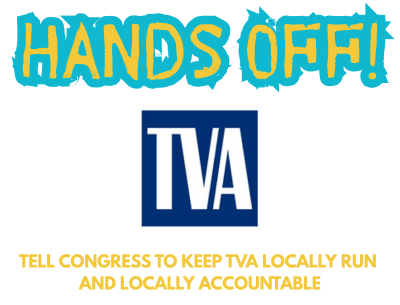
Hands Off TVA! – Tell Congress to Keep TVA Locally Run and Locally Accountable Donald Trump wants to sick his DOGE dogs on TVA. Tell him no! For almost a century, TVA has delivered regional power and regional jobs for the region’s working families. Selling TVA to an outside energy corporation will put the shareholders’ bottom line over the needs of the rate payers. Company execs will pad profits by raising electricity costs on families living paycheck to paycheck. Keep TVA locally run and locally accountable. Keep energy costs down by keeping the DOGE dogs out. Read more…Send a letter to your lawmakers…
IFPTE Calls on Congressional Representatives to Sign the Discharge Petition to Uphold Federal Workers’ Collective Rights and Stop the Single Largest Union-Busting Effort in American History The executive officers of the International Federation of Professional and Technical Engineers (IFPTE) joined with Congressman Jared Golden (D-ME), Congressman Brian Fitzpatrick (R-PA), Congressional Labor Caucus Co-Chairs Donald Norcross (D-NJ) and Debbie Dingell (D-MI), and Congressional Progressive Caucus Chair Greg Casar (D-TX) to announce the discharge petition to bring the Protect America’s Workforce Act, H.R. 2550, to a House floor vote. Read more…
IFPTE Locals Throughout New Jersey Join State Labor Movement in Opposing GovernorMurphy’s 37% Healthcare Cost Hike – Urge Legislature to Return to Trenton IFPTE and the New Jersey AFL-CIO were among the more than a dozen unions representing well over 140,000 workers in New Jersey calling on state lawmakers to return to the state capitol in Trenton and pass legislation mitigating Governor Murphy’s proposed 37% hike in healthcare costs for state workers. Read more…
IFPTE Strongly Opposes Trump Administration and OMB’s First FY25 Rescission Request and Urges Senate to Reject All Rescission Proposals On Tuesday, on a 51-50 Senate votewith a tie-breaking vote from Vice President Vance, the Senate advanced a $9.4 billion rescission package that would cancel Fiscal Year 2025 (FY25) funding for foreign health aid and defund the entirety of the Corporation for Public Broadcasting, FY25 funding that Congress enacted with bipartisan support. Read more…
IFPTE Secretary-Treasurer Gay Henson Attends AFL-CIO Annual Secretary Treasurers Meeting IFPTE Secretary-Treasurer, Gay Henson, along with Assistant to the Executive Officers, Brian Kildee, were in attendance this week at the annual AFL-CIO’s Secretary-Treasurers’ meeting in Washington, DC. The annual meeting is an opportunity for AFL-CIO affiliated Secretary-Treasurers to meet and discuss the major issues impacting working families, as well as to complete internal business matters. Read more…
Biggs Lends Support to Carnegie Voluntary Recognition Campaign President Matt Biggs adds his voiceto the calls for @carnegieendow to move past Andrew Carnegie’s legacy of union busting and voluntarily recognize @carnegieworkers!
#recognizeourunionnow#democracyatcarnegie ###
Calling all Federal Locals to ‘Get in the Queue’ – IFPTE EDues Program is Underway IFPTE continues to roll out the new EDues program, with Locals 121 and 1 currently signing up members, and Locals 32, 1921, and 12 set to take part in phase two of the EDues program. Read more…
IFPTE Keeps Members and Allies Informed on the Trump Administration in the Federal Sector Thousands of people have signed up to receive our Federal News Updates. Please fill out the online formto be added to the list, or if you’ve already signed up, please share this link with a friend or coworker.
IFPTE Calls for Bipartisan Senate Support for NASA and Legislative Branch Funding for Upcoming Fiscal Year This week, the full Senate Appropriations Committee considered three fiscal year 2026 (FY26) appropriations bills to fund NASA, Commerce Department (including NOAA), the Government Accountability Office (GAO), the Congressional Research Service (CRS) as well as several other key agencies and departments. Read more…
NPEU Summer School Series Lecture: “Confronting Authoritarianism: The Role of Think Tanks” NPEU’s Political Engagement Teams are continuing their Summer School Series on July 29th with a lecture and discussion featuring Dr. Van Metre, former Director for Peace, Climate, and Democratic Resilience at the National Democratic Institute. Read more…
The Society Visits CUPE 5525 Picket Line in Solidarity Last week, the Society of United Professionals (SUP/IFPTE Local 160) visited the picket line of CUPE Local 5525 to offer our support and solidarity to the striking frontline care workers at Villa Colombo Homes for the Aged Inc. Read more…
IFPTE Endorses SPEEA Member David Garrett for Marysville City Council IFPTE is proud to give our full backing to SPEEA/IFPTE Local 2001 member, David Garrett, who is running for the Marysville City Council. Brother Garrett has an impressive career of service to SPEEA, having served as SPEEA Area Rep, Council Rep, Northwest Vice President, and participating in key committees such as Tellers, Legislative & Public Affairs, and Organizational Planning. Read more…
IFPTE Participates in Summer AFL-CIO Executive Council Meeting IFPTE President, Matt Biggs, Secretary-Treasurer, Gay Henson, and Assistant to the Executive Officers, Brian Kildee, attended the biannual AFL-CIO executive council meeting this week in Washington, DC. Read more…
“Its Better In a Union” – IFPTE Joins the AFL-CIO, Labor Movement for Its Bus Tour Kickoff Celebration Led by AFL-CIO President, Liz Shuler, Secretary-Treasurer, Fred Redmond, and several labor leaders across sectors, including IFPTE President, Matt Biggs, the American labor movement kicked off the “It’s Better In a Union” Bus Tour this week in Washington, DC. Read more…
Calling all Federal Locals to ‘Get in the Queue’ – IFPTE EDues Program is Underway IFPTE continues to roll out the new EDues program, with Locals 121 and 1 currently signing up members, and Locals 32, 1921, and 12 set to take part in phase two of the EDues program. Read more…
IFPTE Keeps Members and Allies Informed on the Trump Administration in the Federal Sector Thousands of people have signed up to receive our Federal News Updates. Please fill out the online form to be added to the list, or if you’ve already signed up, please share this link with a friend or coworker.
Labour News
CLC Warns Against Austerity The Canadian Labour Congress (CLC) is speaking out against Prime Minister Carney’s instruction to cabinet to identify deep operational savings, a dangerous step in the wrong direction, one that puts critical public services and the workers who deliver them on the chopping block. Read more…
IFPTE Federal Sector Round Up on Trump/Musk and DOGE Attacks on Federal Workers
Despite IFPTE’s best efforts, along with the entire U.S. labor movement, the Senate and House managed to barely pass a budget reconciliation bill that eliminates over $1 trillion in combined federal funding for the Medicaid and SNAP programs. Make no mistake, these are historically steep and draconian cuts that the bipartisan Congressional Budget Office (CBO) estimates will result in 16 million Americans losing healthcare coverage and millions more, particularly children, losing food assistance, not to mention the shuttering of hospitals across the nation.
In addition to doing away with healthcare, sadly this will also impact some 850,000 jobs, particularly in the public and healthcare sectors, which is very troubling for IFPTE Locals across the United States, as IFPTE represents tens of thousands of state and local government, and healthcare workers. After all was said and done, the bill passed the Senate when Vice President Vance had to cast the tie breaking vote after all but three Senate Republicans (Rand Paul, Thom Tillis and Susan Collins) joined all Democrats in voting against the bill. All House Democrats along with two Republicans (Brian Fitzpatrick and Thomas Massi) voted against it in that Chamber. In that regard, a special note of appreciation to Congressman Fitzpatrick, a good friend to IFPTE, who held firm in voting against both the House rule to allow the bill to move to final vote (the only Republican to do so), and against the underlying bill. We know that Rep. Fitzpatrick is as great a supporter of labor as there is in Congress, and we thank him for also seeing the fallacy of this legislation. President Trump, for his part, signed the bill on Independence Day of all days, leading the way for huge tax cuts for billionaires at the expense of Medicaid and SNAP recipients.
As bad as this legislation is, it could have been worse if not for the legislative efforts of IFPTE and the labor movement. Let us not forget that leading up to passage of the bill, Senate Homeland Security and Governmental Affairs Committee (HSGAC) Chairman, Rand Paul, with the support of Senate Majority Leader Thune, aimed to include policy proposals to eliminate official time for federal unions, give the President the authority to reorganize and dismantle federal agencies without Congressional approval, politicize the civil service, slash pensions, and undermine collective bargaining by forcing newly hired federal employees to choose to be at-will employees or pay a surcharge of 5% of their federal salary for merit protections. Simply stated, these proposals were intended to destroy federal unions. However, IFPTE’s efforts to work with key Senate offices against these proposals proved largely successful, as the Senate parliamentarian saw the proposals for what they were – policymaking based on an anti-federal worker, anti-federal union ideology. As a reminder, here is IFPTE’s response that includes our letter, and the Senate Budget Committee Dems response, and here isIFPTE’s statement following House passage.
IFPTE thanks all Locals that helped to work against this legislation. It was a long and grueling effort, but one worth making. A special shout-out to Local 21 as the Local and members implemented an aggressive campaign to let their Congressionals know that if they support this bill, we will remember come election time. After all, this bill is overwhelmingly unpopular among the American public, yet the Republican-led Congress acquiesced once again to the demands of President Trump and passed it, proving yet again that elections have consequences. We must not forget which lawmakers supported this, as well as those that did not.
Looking forward, Congress will continue to move forward with the appropriations process, something of keen interest to IFPTE and our members. Top of the list are President Trump’s proposals to slash science and aeronautics funding at NASA (science funding by 47%, with an overall NASA budget cut of 25%), slash funding at NOAA, the Army Corps of Engineers, GAO and CRS. We will continue to work in a bipartisan way with Congressional appropriators on these critical funding issues. Finally, IFPTE will of course seek to defund President Trump’s Executive Orders seeking to bust federal unions.
IFPTE also continues to work in support of HR 2550, the Protect America’s Workforce Act, legislation jointly sponsored by Republican Congressman Brian Fitzpatrick and Democratic Representative Jared Golden to overturn the Trump Administration’s union busting executive order denying collective bargaining rights to 1.5 million federal workers, including thousands of IFPTE-represented workers, while eliminating union payroll dues deduction. HR 2550 has eclipsed over 50% of House support with 222 bipartisan cosponsors. As has been reported here for the last several weeks, we continue to pursue a discharge petition in the House, which will bypass the opposition of House Speaker, Mike Johnson, and trigger full house consideration. That effort continues and will likely run well into Fall, and perhaps even the Winter.
Legislative Director Faraz Khan is also working to procure a Senate companion bill to HR 2550. Senator Mark Warner from Virginia is ready to introduce the bill, but there has yet to be a Republican Senator step up to co-introduce the bill with him, a point of great frustration to IFPTE and all of labor. Keep in mind that Senators Susan Collins from Maine and Lisa Murkowski from Alaska enjoy large populations of federal employees working and living in their respective states, including thousands of IFPTE members. It should be a no-brainer for each to lead this effort on the Republican side, but they are picking and choosing which issues to fight the Trump Administration on and, so far, fighting for federal workers apparently isn’t one of them. IFPTE members, and all federal workers living in Maine or Alaska should contact each of their offices and ask the question: “Do you support me as a federal worker, or do you support President Trump’s attack on my rights?” We are continuing to work to get the Senate version introduced.
Finally, IFPTE continues to roll out the EDues program with Locals 121 and 1 currently signing up members, and Locals 12, 3, 1921, 561 and others in the queue. As reported above, there is an injunction on the Order eliminating dues deduction and collective bargaining rights and the dues deduction may be turned back on…However, IFPTE is advising Locals to transfer over to EDues, even if the dues are turned back on. As unions we can’t have faith that President Trump, or a future President for that matter, will not try to eliminate our ability to collect dues moving forward. We can control our dues collection and should do so moving forward. That said, we thank all of the Locals across the IFPTE family that stepped up to support IFPTE’s federal sector by contributing to the set-up cost of the EDues system. “THANK YOU” to Locals 1, 20, 21, 70, 160, 162, 194, 195, 1921 and 2001 for your generous contributions to the EDues program!
Below is a summary of where things stand in the Courts and the ongoing Grassroots efforts.
LEGISLATIVE:
The so-call big, beautiful bill passes Senate, House and is signed into law – As stated above, both the Senate and House very narrowly passed HR 1, a budget reconciliation bill that cuts over $1 trillion from Medicaid and SNAP and uses the $1 trillion in cuts to help pay for a tax cut for billionaires and corporations. Even with the cuts, the bill adds nearly $4 trillion to the national debt over ten years. As bad as the bill could have been though, IFPTE legislative efforts did pay off, as Republican efforts to include language aimed at eliminating federal unions, turning the federal government into an at-will employer, forcing federal workers to pay upwards of 15% of their income into their pensions without any benefit increase, and allowing the President to have carte blanche in reorganizing federal agencies were all disallowed by the Senate Parliamentarian. IFPTE thanks all Locals that helped to work against this legislation.
Appropriations – As we all know, federal agencies are currently operating under a Continuing Resolution (CR), as Congress has yet to pass the Fiscal Year 2025 (FY25) appropriations bills, even while appropriators are turning their attention to the Fiscal Year 2026 (FY26) funding bills. There are many issues impacting IFPTE members that are tied to the appropriations process, including NASA, NOAA, GAO and CRS funding, all of which are under attack by the Trump Administration. IFPTE will continue to work closely with the Locals and members as we advocate for them on Capitol Hill during the appropriations process.
The Protect America’s Workers Act (HR 2550) – As indicated above, we continue to work on the discharge petition for HR 2550, introduced last month by Republican Rep. Brian Fitzpatrick (PA) and Democratic Rep. Jared Golden (ME) to repeal the Trump Executive Order (EO) eliminating collective bargaining rights for 1.5 million federal workers, now has 222 cosponsors representing more than 50% of the House of Representatives. A discharge petition is needed because despite the overwhelming support for the legislation, House Speaker Mike Johnson will not schedule the bill for consideration. See IFPTE’s letter supporting the House bill.
IFPTE continues to ask lawmakers to cosponsor HR 3093, The “Restoring Employment and Hiring Incentives for Removed Employees Act” or REHIRE Act to rebuild the federal workforce by providing a hiring preference for federal workers who were fired or otherwise involuntarily removed during the Trump Administration, and; HR 3094, the ‘‘Probationary Reduction for Employee Protections Act’’ or PREP Act, which would clarify that federal employees who are new to the competitive service have a 1-year probationary period, and employees who are moving to a new competitive service position from another position will have a 6-month probationary period. Both bills are authored by Congressman Don Beyer (D-VA) and IFPTE is encouraging Locals to also urge their House members to cosponsor these bills.
LEGAL:
Supreme Court decision on nationwide injunctions and AFGE-led case in the U.S. District Court for the Northern District of California – A preliminary injunction was granted last month by the U.S. District Court for Northern California against Trump’s March 27th Union Busting Executive Order. The Judge in the case noted that Plaintiffs are likely to win and granted the injunction blocking the Order, saying that the Union busting order aimed to overturn 60 years of the legally protected practice of federal workers engaging in collective bargaining. Read the GovExec article about the injunction.
Remember that this AFGE case is the second of two filed so far against the Union busting order, with NTEU filing the initial lawsuit in the DC Federal Circuit. Unfortunately the May 7th injunction on the Trump union busting EO in the NTEU lawsuit was lifted on May 16th by a three-judge appeals panel. The 2-1 majority decision lifting the restraining order ruled that the National Treasury Employees Union (NTEU) did not prove damages to the Union, even though the EO caused the immediate elimination of payroll Union Dues from federal union members to their Unions, including IFPTE. The merits of the NTEU suit continue through the legal process.
That said, on June 27th the Supreme Court issued a ruling in what is being referred to in the press as the ‘birthright citizenship’ case. However, that case did not deal with the merits of whether or not birthright citizenship was constitutional. Instead, the Trump Administration challenged the ability of federal district courts to issue nationwide injunctions, like the one issued in AFGE case last month. The Supreme Court, in a 6-3 decision, threw out decades of precedent by limiting judges’ ability to issue nationwide injunctions against illegal executive orders, including the Trump union busting and RIF orders, just to name a few. In what can only be described as confusion, the MAGA Supreme Court seemed to be bending over backwards to appease President Trump with this ruling. Right now, it is hard to determine what exactly this means for all of the Union lawsuits against the orders – the lawyers for the Unions are determining this now and planning a legal path forward. In the meantime, here is a GovExec story on the decision. We will keep you all up to speed as we learn more.
Finally, IFPTE is expected to be Plaintiff in a yet to be filed third lawsuit against the Order, that will take into account this latest development from the Supreme Court. That should be filed later this Summer or Fall.
More lawsuits to come – As part of the overall litigation strategy, IFPTE is part of a coalition of unions joining together to file an additional lawsuit later this Summer against the Executive Order in a venue to be determined. We thank those Locals that have already provided information to our Legal Department and ask that Local leaders continue to do so as we prepare. Please contact IFPTE General Counsel Teresa Ellis at tellis@ifpte.org with any pertinent information regarding specific impacts from the imposition of the EO.
May 22nd injunction blocking EO 14210 on RIFs remains in place – The preliminary injunction in the Ninth Circuit that was granted on May 22nd stated that President Trump cannot implement mass layoffs of federal workers without the approval of Congress which created these agencies. “Presidents may set policy priorities for the executive branch, and agency heads may implement them. This much is undisputed,” said Judge Susan Illston for the Northern District of California in her decision. “But Congress creates federal agencies, funds them, and gives them duties that—by statute—they must carry out. Agencies may not conduct large-scale reorganizations and reductions in force in blatant disregard of Congress’s mandates, and a President may not initiate large-scale executive branch reorganization without partnering with Congress.” The ruling is an extension of the two-week temporary restraining order (TRO) she previously issued on May 9. This means the 22 agencies named in the lawsuit are prohibited from implementing their planned layoffs until the case is resolved.
The restraining order applies to the following agencies: OMB, OPM, DOGE, USDA, Commerce, Energy, HHS, HUD, Interior, Labor, State, Treasury, Transportation, VA, AmeriCorps, EPA, GSA, NLRB, NSF, SBA, and SSA and their efforts to implement or enforce sections 3(c) and 3(e) of Executive Order 14210 or the February 26, 2025 OMB/OPM Memorandum.
In addition, plaintiffs this week sought an emergency status conference for “apparent noncompliance” with a federal judge’s preliminary injunction barring officials from carrying out large-scale reductions in force. At least two federal agencies — the State Department and the Department of Housing and Urban Development — have “continued to implement” President Donald Trump’s Executive Order 14210 despite U.S. District Judge Susan Illston’s preliminary injunction barring them from doing so. This, among other cases, moves in the direction of a constitutional showdown and we will be watching closely and ready to mobilize.
As explained in the GovExec article, the Supreme Court decision limiting nationwide injunctions likely does not apply to RIF cases like this.
The Trump Administration has appealed to the Supreme Court.
Possible victory against “channeling” – National Association of Immigration Judges (NAIJ/IFPTE Judicial Council) 2 First Amendment Case – Two weeks ago the 4th Circuit Court of Appeals delivered a huge win for the NAIJ/IFPTE Judicial Council 2, and federal workers, by reviving a First Amendment case brought by the NAIJ against the Department of Justice’s ‘gag order’ imposed on Immigration Judges. The DOJ policy required pre-approval by the agency for any immigration judge to speak on “official matters,” including for any union officials acting in their union capacity on behalf of the immigration judges’ unit. The district court had found that the NAIJ had to first go to the Merit Systems Protection Board (MSPB) before suing in federal court and dismissed the case. However, the 4th Circuit decision recognized the current state of affairs throughout the civil service system and questioned whether the MSPB and the Office of Special Counsel (OSC) were still functional given the Trump Administration’s attacks on them. In her opinion, Judge Berman wrote, “The Civil Service Reform Act requires a strong and independent Merit Systems Protections Board and Special Counsel. That foundational principle, that functioning and independent bodies would receive, review, and decide in the first instance challenges to adverse personnel actions affecting covered federal employees, has recently been called into question. Because Congress intended for the Civil Service Reform Act to strip district courts of jurisdiction only if federal employees were otherwise able to receive adequate and independent review of their claims, we vacate and remand to the district court to consider whether the text, structure, and purpose of the Civil Service Reform Act has been so undermined that the jurisdiction stripping scheme no longer controls.”
As such, the court has helped clear a path for federal unions arguing against so-called “channeling” to the FLRA, OSC, and MSPB by acknowledging the fact that bringing an issue to a broken system for a resolution is futile. Here is a link to the decision.
In other news on the legal front:
IFPTE is a co-plaintiff in a RIF case in D.C. District Court covering all our Locals, including DOD. As we previously informed you, plaintiffs’ requests for a TRO and PI were rejected by the court. This case is still pending on the merits; the government filed a motion to dismiss on May 15. Here is the amended complaint. We will keep Locals updated as this litigation continues.
IFPTE RIF guidance to Locals – Please see the March 11 memo from IFPTE GC, Teresa Ellis and Greg McGillivary of McGillivary Steele Elkin regarding Reductions-In-Force (RIFs) and Mass Terminations of Federal Employees. OPM, OMB and DOGE mandated that federal agencies produce RIF lists by April 14. RIF guidance memo here.
See the February 26th OPM memo instructing agencies to largely ignore RIF language in union negotiated CBA’s and calling on agencies to identify positions to RIF by April 14. IFPTE recommends that Locals file grievances if management refuses to abide negotiated RIF language in their respective CBAs.
Legal support for federal workers – Rise Up, Fight Back – Hundreds of thousands of federal workers have had their basic rights violated on the job—including tens of thousands who have been fired illegally. Federal workers have an urgent need for legal support. Federal workers now have a network of lawyers helping to get them the justice they deserve. See the GovExec article here.
“Civil Service Strong” coalition – IFPTE has partnered with the Civil Service Strong project of Democracy Forward, along with other unions, to support our members who are civil servants under attack by the Trump administration. Alongside the 95% of people who believe civil servants should be hired and promoted based on their merit rather than their political beliefs, Civil Service Strong is committed to supporting a career, non-partisan civil service and the people who power it. Learn more here.
MAKE A CALL – Restore Federal Employee Rights Now – IFPTE joins the AFL-CIO campaign askingevery single American who cares about the fundamental freedom of all workers to join a union to call their member of Congress right now. Fill out the form on the right to receive a call or dial 844-896-5059. Learn more here.
PUBLIC RELATIONS AND COMMUNICATIONS
Thousands of people have signed up to receive our Federal News Updates. Please fill out the online form to be added to the list, or if you’ve already signed up, please share this link with a friend or coworker.
IFPTE wishes all members and their families throughout the United States a festive, fun, rewarding, and safe 4th of July
“The True North, Strong and Free” – IFPTE Celebrates Canada Day, Attends Solidarity Event at Canadian Embassy On this first day of July 2025, the 90,000 members of IFPTE across North America honour Canada Day. IFPTE was proud to take part in an event at the Canadian Embassy in Washington, DC today to sing the Canadian National Anthem, while showing our Solidarity and Support for our Canadian Siblings, Sisters and Brothers. Read more…
IFPTE Executive Officers Released the Following Statement on the House of Representatives’ Vote on the Republican Funding Bill This morning, Congressional Republicans were barely able to scrape together enough votes from their own party to pass their own bill that contains the broad policy agenda of their own president. This political win for a handful of out-of-touch Washington insiders represents a devastating loss for American families living paycheck to paycheck. Read more…
Local 21’s Kat General Elected First VP at APALA National Board IFPTE is proud to report that Local 21 Field Director, Kat General, was elected as the First Vice President to the national board of the AFL-CIO’s Asian Pacific American Labor Alliance (APALA). Kat commented that, “I am honored by the support and trust that APALA’s delegates from across the United States have extended to me. Read more…
IFPTE Condemns Senate Republican Bill That Extends Billionaire Tax Cuts on the Backs of Working Americans, Children, Veterans, and Seniors IFPTE abhors the Senate’s passage of the so-called “One Big Beautiful Bill Act,” H.R. 1, budget reconciliation, which extends President Trump’s tax cuts for billionaires and corporations and offsets some of the costs through cutting nearly $1 trillion in Medicaid and Supplemental Nutrition Assistance Program (SNAP) while adding over $4 trillion to the national debt through 2034. Read more…
SCMMA Supports Annual Pancake Breakfast Fundraiser for United Way The 49th Annual Civic Pancake Breakfast raised more than $10,000 for the City of Saskatoon’s community partner, the United Way Saskatoon & Area. Read more…
SCMMA Joint Annual Golf Tournament Raises $1,000 for Local Charity SCMMA/IFPTE Local 222 partnered with ESA once again for a member golf tournament on June 6, 2025, with a record high participation of 144 golfers. Read more…
Over IFPTE’s Objections, Senate Passes Historically Draconian Budget Bill Despite the best efforts of IFPTE and IFPTE Locals nationwide, including Local 21, the Senate passed, by a single vote, their version of the budget reconciliation bill that will go down in history as one of the cruelest pieces of legislation that has passed in Congress in recent history, if not ever. Read more…
Calling all Federal Locals to ‘Get in the Queue’ – IFPTE EDues Program is Underway IFPTE continues to roll out the new EDues program, with Locals 121 and 1 currently signing up members, and Locals 32, 1921, and 12 set to take part in phase two of the EDues program. Read more…
IFPTE Keeps Members and Allies Informed on the Trump Administration in the Federal Sector Thousands of people have signed up to receive our Federal News Updates. Please fill out the online form to be added to the list, or if you’ve already signed up, please share this link with a friend or coworker.
Southern California Edison Workers Celebrate Overwhelming & Historic Union Election Victory with ESC Local 20 The National Labor Relations Board (NLRB) announced that in a 562 – 351 vote, over 1,100 planners, designers, and field technicians at Southern California Edison have won their election for a union. A total of 83% of the unit voted in the election. The bargaining unit is represented by Engineers and Scientists of California (ESC/IFPTE Local 20). Read more…
Senate Parliamentarian Rules Against Including Attacks on Official Time, Civil Service, and Congressional Authority in Reconciliation Bill The Senate Parliamentarian has ruled that several anti-federal worker and anti-government provisions in the Senate’s budget reconciliation bill violate procedural rules and must be removed. Read more…
SPEEA Efforts Help Bring Back 58 Laid-off Employees SPEEA recently achieved an agreement that requires the return to employment of 58 individuals who were laid off earlier this year. In addition to their jobs, they were also made whole for lost wages and benefits. Read more…
Local 777 Holds Information Picket Against ICE Members of Local 777 after a successful informational picket and oath re-affirmation at Federal Plaza in Chicago on June 25, 2025. Read more…
SPEEA Participates in ICE Out Rally A total of 10 SPEEA officers, staff, and retirees took part in the June 25 informational picket outside the Henry M. Jackson Federal Building in Seattle. Read more…
In Other News…
Henson Addresses the AFL-CIO’s Central Region Organizing Meeting IFPTE Secretary-Treasurer Gay Henson joined the AFL-CIO, NFFE and the Presidents of the Illinois State Federation and Chicago Central Labor Council to kick off the AFL-CIO’s Central Region Organizing Meeting. Read more…
IFPTE, SUP Attend 2025 North American Young Generation Nuclear Conference IFPTE and SUP/IFPTE Local 160 joined hundreds of young professionals and industry leaders from Canada and the United States at the North American Young Generation Nuclear (NAYGN) 2025 Continental Conference in Denver. Read more…
IFPTE Asks House Appropriations Committee to Fund GAO and CRS So Congress Can Support Robust Oversight and Good Governance IFPTE sent a letter requesting the House Appropriations Committee and the Legislative Branch Subcommittee of the House Appropriations Committee provide funding for the Government Accountability Office and the Congressional Research Service at adequate levels. Read more…
SCMMA Attends 2025 Saskatoon PRIDE Parade SCMMA/IFPTE Local 222 board members were proud to attend the 2025 Saskatoon Pride Parade on Sunday, June 22, and walk alongside coworkers as part of the City of Saskatoon’s float. Read more…
TEAM and WAPSO Host Membership Lunch Events in Winnipeg IFPTE Locals in Winnipeg hosted lunch events this week and last for members working throughout the city. Read more…
IFPTE Attends Meeting with Manitoba’s New US Trade Representative Representatives from the IFPTE attended a meeting yesterday at the Manitoba Legislative Building to meet the province’s newly appointed Provincial Trade Representative to the US, Richard Madan. Read more…
“Solidarity. Unity. Resistance.” – IFPTE Participates in ‘Presidents Panel’ at APALA Convention IFPTE was invited this week to take part in a ‘Presidents Panel’ discussion at the Asian Pacific American Labor Alliance’s (APALA) 18th biennial convention in Los Angeles. Read more…
IFPTE President Speaks to America’s Workforce Podcast – Denounces Senate Budget Reconciliation Bill President Biggs joined radio host of America’s Workforce Podcase, Ed “Flash” Ferenc, to discuss the Senate Republican majority’s efforts to ram through a budget reconciliation package. Read more...
SPEEA, IFPTE Attend NTSB Board Meeting on Boeing Door Plug Separation SPEEA/IFPTE Local 2001 and IFPTE attended the National Safety Transportation Board meeting to determine the probable cause of the in-flight separation of a mid-exit door plug on a Boeing 737-9 passenger airplane last year. Read more…
IFPTE Attends New Jersey State AFL-CIO Endorsement Conference IFPTE leaders in New Jersey attended the New Jersey State AFL-CIO Endorsement Conference held in Atlantic City on June 16-18, 2025. Read more…
IFPTE Joins Labor Letter Opposing Nomination of Project 2025 Author to Serve as Labor Department’s Top Lawyer IFPTE joined a letter led by the AFL-CIO to strongly oppose the nomination of Jonathan Berry to serve as the Department of Labor’s (DOL) Solicitor of Labor. Read more…
Calling all Federal Locals to ‘Get in the Queue’ – IFPTE EDues Program is Underway IFPTE continues to roll out the new EDues program, with Locals 121 and 1 currently signing up members, and Locals 32, 1921, and 12 set to take part in phase two of the EDues program. Read more…
IFPTE Keeps Members and Allies Informed on the Trump Administration in the Federal Sector Thousands of people have signed up to receive our Federal News Updates. Please fill out the online formto be added to the list, or if you’ve already signed up, please share this link with a friend or coworker.
OFL nominations now open: Solidarity & Pride Champion Award Nominations are open for the Ontario Federation of Labour’s (OFL) Solidarity & Pride Champion Award! Learn more here…
IFPTE Federal Sector Round Up on Trump/Musk and DOGE Attacks on Federal Workers
Just when you think that the United States Senate is the somewhat thoughtful chamber of the United States Congress, relatively speaking, they unveil a version of a budget reconciliation bill that is even more draconian and immoral than the House-passed bill that IFPTE opposed. The Senate bill seeks to add Republican Homeland Security and Government Affairs Committee (HSGAC) policy proposals to eliminate official time and attack unions, give the President the authority to reorganize and dismantle federal agencies without Congressional approval, politicize the civil service, and undermine collective bargaining by forcing newly hired federal employees to choose to be at-will employees or pay a surcharge of 5% of their federal salary for merit protections. IFPTE, in coordination with the AFL-CIO, the Federal Workers Alliance (FWA), AFGE, NFFE, other several other unions, is working closely with key Senate lawmakers and staff to get these provisions ruled non-germane by the Senate Parliamentarian and therefore not included in the bill that the Senate plans to vote on. Here is a GovExec article that quotes IFPTE regarding the reorganization abrogation attempt. We are asking all our Locals and members to contact their Senators urging them to reject these provisions.
In addition to the federal employee-related provisions, the Senate bill contains deeper cuts than the House bill’s largest cuts to Medicaid and echoes the House bill’s sweeping cuts to food assistance programs that our nation has even seen, cuts that the non-partisan Congressional Budget Office (CBO) estimates with result in 16 million Americans losing healthcare coverage and millions more, particularly children, losing food assistance. In addition to the impact these cuts would have on those losing healthcare and food assistance, the Medicaid program is the number one source of federal funding to state governments, with SNAP federal resources also being a significant source of federal revenue to states and localities. These cuts would lead to a loss of upwards of 850,000 jobs, according to the Economic Policy Institute’s Chief Economist, Josh Bivens.
While IFPTE continues to work against the House and Senate budget reconciliation packages, we continue to work in support of HR 2550, the Protect America’s Workforce Act, legislation jointly sponsored by Republican Congressman, Brian Fitzpatrick and Democratic Representative Jared Golden to overturn the Trump Administration’s union busting executive order denying collective bargaining rights to 1.5 million federal workers, including thousands of IFPTE-represented workers, while eliminating union payroll dues deduction. HR 2550 has eclipsed over 50% of House support with 222 bipartisan cosponsors. Because the bill has a majority of the House supporting it, we are now attempting to procure a discharge petition in the House that would allow the bill to go straight to the House floor for an up or down vote. That discharge petition is needed because House Speaker Mike Johnson and the Republican House majority will not schedule this bill for committee action, much less a House vote. That’s unfortunate, but not surprising, and IFPTE will continue to plow ahead to get a House vote. As for the Senate companion bill that legislative director Faraz Khan is working to get introduced, there has yet to be a Republican Senator step up to co-introduce the bill with a Democratic Senator. This remains frustrating to IFPTE, particularly with respect to Senators Susan Collins from Maine and Lisa Murkowski from Alaska, who given their large populations of federal employees working and living in their respective states, including thousands of IFPTE members. One would think that both would be anxious to support legislation like this…despite our frustration there, we are continuing to work to get the Senate version introduced.
Legally, a preliminary injunction hearing was held on Wednesday in relation to the AFGE-led case against the Trump March 27th Union Busting Executive Order. The case was heard in the U.S. District Court for the Northern District of California, with the labor lawyers arguing that the Trump Administration’s attempt to eliminate the collective bargaining rights of over 1 million federal employees is retaliatory. Let us not forgot that along with the Union Busting EO also came an accompanying memo from the Administration calling federal unions “hostile” and alleging that they had “declared war on President Trump’s agenda.” IFPTE, which expects to be on a third lawsuit later this summer against the same Executive Order, is hopeful that the Court will grant an injunction against the EO and restore the collective bargaining rights of impacted workers, including IFPTE members. The status of other lawsuits is below.
Finally, IFPTE continues to roll out the EDues program with Locals 121 and 1 signing up members currently, and Locals 12, 3, 1921, 561 and others in the queue. IFPTE is hopeful that the Courts will ultimately rule against the Trump EO that took away dues deduction and collective bargaining rights, but is advising Locals to transfer over to EDues, even if the dues get turned back on. As unions we can’t have faith that President Trump, or a future President for that matter, will not try to eliminate our ability to collect dues moving forward. We can control our dues collection and should do so moving forward. That said, we again thank all the Locals across the IFPTE family that stepped up to support IFPTE’s federal sector by contributing to the set-up cost of the EDues system. “THANK YOU” again to Locals 1, 20, 21, 70, 160, 162, 194, 195, 1921 and 2001 for your generous contributions to the EDues program!
LEGISLATIVE:
The Senate budget reconciliation bill has been cobbled together this week by the Senate budget committee, and somewhat surprisingly, it is even worse than the House-passed bill that IFPTE opposed. Everything from historic cuts to Medicaid and SNAP, to federal employee-related provisions that aim to eliminate federal unions altogether, are in the bill. IFPTE responded by sending a letter to Senate leaders warning that the provisions, “would harm federal agencies’ ability to work with federal employee unions to create efficient workplaces, recruit and retain the best talent America has to offer to address the challenges our nation faces, support our national security and economic prosperity, provide the American people with high-quality services, and keep our communities safe.” IFPTE further urged Senate lawmakers to make the case to the Senate Parliamentarian that these radical, policy changing provisions have no place in a budget reconciliation bill. See IFPTE’s letter here, and the GovExec article on the efforts of the Senate to abrogate their oversight of government agencies to the president.
The Protect America’s Workers Act (HR 2550) introduced last month by Republican Rep. Brian Fitzpatrick (PA) and Democratic Rep. Jared Golden (ME) to repeal the Trump Executive Order (EO) eliminating collective bargaining rights for 1.5 million federal workers, now has 222 cosponsors, representing more than 50% of the House of Representatives. This means that IFPTE and labor can now pivot to working to get these cosponsors to sign a discharge petition to force a full vote of the House of Representatives. A discharge petition is needed because despite the overwhelming support for the legislation, House Speaker Mike Johnson will not schedule the bill for consideration. See IFPTE’s letter supporting the House bill.
Tell Congress: Hands Off Federal Employees’ Retirement Benefits and Merit System Protections. IFPTE and the larger labor movement’s legislative efforts were successful in getting the FERS pension cuts for federal workers removed from the House-passed budget reconciliation package. However, the fight is not over, as this issue now moves over to the Senate. As reported in The Hill this week, Senate support for the draconian House bill is not certain. In other words, we need to shift our focus to Senate lawmakers and tell them, “Hands Off” of our retirement benefits. Slashing retirement benefits and reducing the take-home pay of federal workers will trigger an exodus of experienced and skilled federal workers and hollow out agencies that provide essential services and functions. Congress needs to hear from everyday Americans that lawmakers should be preserving the government’s ability to recruit and retain the best talent America has to offer to address the challenges our nation faces, support our national security and economic prosperity, provide the American people with high-quality services, and keep our communities safe. Email Your Senators and urge them to oppose any cuts to federal employees’ retirement benefits, any reductions to take-home pay, and any effort to force newly hired federal employees to choose between pay and civil service protections.
IFPTE continues to ask lawmakers to cosponsor HR 3093, the “Restoring Employment and Hiring Incentives for Removed Employees Act” or REHIRE Act to rebuild the federal workforce by providing a hiring preference for federal workers who were fired or otherwise involuntarily removed during the Trump Administration, and; HR 3094, the ‘‘Probationary Reduction for Employee Protections Act’’ or PREP Act would clarify that federal employees who are new to the competitive service have a 1-year probationary period, and employees who are moving to a new competitive service position from another position will have a 6-month probationary period. Both bills are authored by Congressman Don Beyer (D-VA) and IFPTE is encouraging Locals to also urge their House members to cosponsor these bills.
LEGAL:
AFGE-led case in the U.S. District Cour for the Northern District of California – A preliminary injunction hearing was held on Wednesday in relation to the AFGE-led case against the Trump March 27th Union Busting Executive Order. The case was heard in the U.S. District Court for the Northern District of California with the labor lawyers arguing that the Trump Administration’s attempt to eliminate the collective bargaining rights of over 1 million federal employees is retaliatory. Let us not forgot that along with the Union Busting EO also came an accompanying memo from the Administration calling federal unions, “hostile,” and alleging that they had, “declared war on President Trump’s agenda.” IFPTE, which expects to be on a third lawsuit later this summer against the same Executive Order, is hopeful that the Court will grant an injunction against the EO and restore the collective bargaining rights of impacted workers, including IFPTE members.
This AFGE case is the second of two filed so far against the union busting order, with NTEU filing the initial lawsuit in the DC Federal Circuit. Unfortunately, the May 7th injunction on the Trump Union Busting EO in the NTEU lawsuit was lifted on May 16th by a three-judge appeals panel. The 2-1 majority decision lifting the restraining order ruled that the National Treasury Employees Union (NTEU) did not prove damage to the Union, even though the EO caused the immediate elimination of payroll union dues from federal union members to their Unions, including IFPTE. The merits of the NTEU suit continue through the legal process.
More lawsuits to come – As part of the overall litigation strategy, IFPTE is part of a coalition of unions joining together to file an additional lawsuit later this Summer against the Executive Order in a venue to be determined. We thank those Locals that have already provided information to our Legal Department and ask that Local leaders continue to do so as we prepare. Please contact IFPTE General Counsel Teresa Ellis at tellis@ifpte.org with any pertinent information regarding specific impacts from the imposition of the EO.
May 22nd injunction blocking EO 14210 on RIFs remains in place – The preliminary injunction in the Ninth Circuit was granted on May 22nd stated that President Trump cannot implement mass layoffs of federal workers without the approval of Congress which created these agencies. “Presidents may set policy priorities for the executive branch, and agency heads may implement them. This much is undisputed,” said Judge Susan Illston for the Northern District of California in her decision. “But Congress creates federal agencies, funds them, and gives them duties that—by statute—they must carry out. Agencies may not conduct large-scale reorganizations and reductions-in-force in blatant disregard of Congress’s mandates, and a President may not initiate large-scale executive branch reorganization without partnering with Congress.” The ruling is an extension of the two-week temporary restraining order (TRO) she previously issued on May 9. This means the 22 agencies named in the lawsuit are prohibited from implementing their planned layoffs until the case is resolved.
The restraining order applies to the following agencies: OMB, OPM, DOGE, USDA, Commerce, Energy, HHS, HUD, Interior, Labor, State, Treasury, Transportation, VA, AmeriCorps, EPA, GSA, NLRB, NSF, SBA, and SSA and their efforts to implement or enforce sections 3(c) and 3(e) of Executive Order 14210 or the February 26, 2025 OMB/OPM Memorandum.
In addition, plaintiffs this week sought an emergency status conference for “apparent noncompliance” with a federal judge’s preliminary injunction barring officials from carrying out large-scale reductions-in-force. At least two federal agencies — the State Department and the Department of Housing and Urban Development — have “continued to implement” President Donald Trump’s Executive Order 14210 despite U.S. District Judge Susan Illston’s preliminary injunction barring them from doing so. This, among other cases, moves in the direction of a constitutional showdown and we will be watching closely and ready to mobilize.
The Trump Administration has appealed to the Supreme Court.
Possible victory against “channeling” – National Association of Immigration Judges (NAIJ), IFPTE Judicial Council 2 First Amendment Case – Two weeks ago the 4th Circuit Court of Appeals delivered a huge win for the NAIJ/IFPTE Judicial Council 2, and federal workers, by reviving a First Amendment case brought by the NAIJ against the Department of Justice’s ‘gag order’ imposed on Immigration Judges. The DOJ policy required pre-approval by the agency for any immigration judge to speak on “official matters,” including for any union officials acting in their union capacity on behalf of the immigration judges’ unit. The district court had found that the NAIJ had to first go to the Merit Systems Protection Board (MSPB) before suing in federal court; and dismissed the case. However, the 4th Circuit decision recognized the current state of affairs throughout the civil service system and questioned whether the MSPB and the Office of Special Counsel (OSC) were still functional given the Trump Administration’s attacks on them. In her opinion, Judge Berman wrote, “The Civil Service Reform Act requires a strong and independent Merit Systems Protections Board and Special Counsel. That foundational principle, that functioning and independent bodies would receive, review, and decide in the first instance challenges to adverse personnel actions affecting covered federal employees, has recently been called into question. Because Congress intended for the Civil Service Reform Act to strip district courts of jurisdiction only if federal employees were otherwise able to receive adequate and independent review of their claims, we vacate and remand to the district court to consider whether the text, structure, and purpose of the Civil Service Reform Act has been so undermined that the jurisdiction stripping scheme no longer controls.”
As such, the court has helped clear a path for federal unions arguing against so-called “channeling” to the FLRA, OSC, and MSPB by acknowledging the fact that bringing an issue to a broken system for a resolution is futile. Here is a link to the decision.
In other news on the Legal front:
IFPTE is a co-plaintiff in a RIF case in D.C. District Court covering all our Locals, including DOD. As we previously informed you, plaintiffs’ requests for a TRO and PI were rejected by the court. This case is still pending on the merits; the government filed a motion to dismiss on May 15. Here is the amended complaint. We will keep Locals updated as this litigation continues.
IFPTE RIF guidance to Locals – Please see the March 11 memo from IFPTE GC, Teresa Ellis, and Greg McGillivary of McGillivary Steele Elkin regarding Reductions-In-Force (RIFs) and Mass Terminations of Federal Employees. OPM, OMB and DOGE mandated that federal agencies produce RIF lists by April 14. RIF guidance memo here.
See the February 26th OPM memo instructing agencies to largely ignore RIF language in union negotiated CBA’s and calling on agencies to identify positions to RIF by April 14. IFPTE recommends that Locals file grievances if management refuses to abide by negotiated RIF language in their respective CBAs.
Legal support for federal workers – Rise Up, Fight Back – Hundreds of thousands of federal workers have had their basic rights violated on the job—including tens of thousands who have been fired illegally. Federal workers have an urgent need for legal support. Federal workers now have a network of lawyers helping to get them the justice they deserve. See the GovExec article here.
“Civil Service Strong” coalition – IFPTE is proud to partner with the Civil Service Strong project of Democracy Forward, along with other unions, to support our members who are civil servants under attack by the Trump administration. Alongside the 95% of people who believe civil servants should be hired and promoted based on their merit rather than their political beliefs, Civil Service Strong is committed to supporting a career, non-partisan civil service and the people who power it. Learn more here.
MAKE A CALL – Restore Federal Employee Rights Now – IFPTE joins the AFL-CIO campaign asking every single American who cares about the fundamental freedom of all workers to join a union to call their member of Congress right now. Fill out the form to receive a call or dial 844-896-5059. Learn more here.
IFPTE Members are telling their Congressional lawmakers: “Hands Off Federal Employees’ Retirement Benefits and Merit System Protection” – Don’t allow millionaires and billionaires in Congress and the White House to use federal employees as a cost offset for budget reconciliation legislation. Learn more here
PUBLIC RELATIONS and COMMUNICATIONS:
Today begins a crucial week for the Bilious Billionaire’s Bill, as the Senate tries to keep the president’s anti-worker agenda moving forward despite its widespread unpopularity. Key provisions have been knocked out for procedural reasons, and IFPTE will track day-to-day changes as we continue to fight against several items aimed at punishing civil servants. Make sure you keep up with the latest and receive critical calls to action by signing up for clips and encourage your coworkers to do the same. To sign up for clips, please fill out this form: https://www.ifpte.org/federal-news-clips.
IFPTE Continues Opposing Budget Reconciliation Bill’s Disastrous Medicaid Cuts As Senate Republicans try to hastily assemble their version of a budget reconciliation bill that extends tax cuts for the wealthiest individuals and large corporations on the backs of working people, IFPTE and our coalition partners sent a letter to Senate Leadership opposing key provisions in the Senate bill. Read more…
Lewis Engineers and Scientists Association Hosts Career Informational Session for NASA Workers Lewis Engineers and Scientists Association (LESA/IFPTE Local 28) President Dr. John Betterson and Vice President Samantha Yousef hosted an information session this week for NASA workers employed at the NASA Glenn Research Center in Cleveland. Read more…
IFPTE Condemns Senate Budget Reconciliation Bill Proposals to Bust Federal Employee Unions, Harm All Working Americans, and the Public Interest IFPTE weighed in with key Senators against the Senate budget reconciliation bill, particularly the draconian and ideologically-driven language from the Homeland Security and Governmental Affairs Committee (HSGAC) aimed at eliminating federal labor unions, turning the federal government into an at-will employer, and abrogating the co-equal branch of government constitutional responsibilities of the legislative branch over to the President. Read more…
Local 196 Sister, Janet Gerhard, Honored with the Inaugural Local 196 First Responder Dedication Award IFPTE Local 196 President, Brother Sean McBride, presented Union Sister Janet Gerhard with the Local 196 First Responder Dedication Award, calling her “our Guardian Angel who gives of herself to help not only turn lives around, but save the lives of Local 196 members who are at the lowest points in their lives.” Read more…
Society Holds First Annual Bruce Region Golf Tournament The Society of United Professionals (SUP/IFPTE Local 160) held its first annual Bruce Region Golf Tournament — and it was a resounding success. Read more…
IFPTE Proudly Celebrates and Honors Juneteenth IFPTE is proud to celebrate and remember Juneteenth, the day in 1865 when slaves in the State of Texas were finally freed from the bondage of slavery. Read more...
Calling all Federal Locals to ‘Get in the Queue’ – IFPTE EDues Program is underway IFPTE continues to roll out the new EDues program, with Locals 121 and 1 currently signing up members, and Locals 32, 1921, and 12 set to take part in phase two of the EDues program. As all IFPTE Locals are aware, particularly federal locals, the EDues program became necessary because of President Trump’s Executive Order eliminating Union dues payroll deduction across most federal agencies. Read more…
IFPTE Keeps Members and Allies Informed on the Trump Administration in the Federal Sector Thousands of people have signed up to receive our Federal News Updates. Please fill out the online form to be added to the list, or if you’ve already signed up, please share this link with a friend or coworker.
IFPTE in the News
6/12/2025 – United Professionals Promote CANDU Technology(CKNX NewsToday) A campaign by The Society of United Professionals is calling for support of CANDU reactors at the proposed Bruce C nuclear plant in Kincardine. Read more here…
6/18/2025 – Saugeen Shores Backs Canada United Campaign (Shoreline Beacon) The Society of United Professionals ‘Canada United’ t-shirt campaign shows pride in the country and its workers. Read more here…
Labour News
OFL nominations now open: Solidarity & Pride Champion Award Nominations are open for the Ontario Federation of Labour’s (OFL) Solidarity & Pride Champion Award! Honour those advancing 2SLGBTQIA+ justice in the labour movement. Deadline: August 31, 2025. Learn more here…
This is our response to Trump’s birthday military parade in DC, so let’s make it really HUGE!!! Find an event or host one. Organize unions into a labor contingent.
1600 Events in all 50 States + Canada, Mexico, Europe and Africa – 220,000 registered to participate.
Senate Budget Reconciliation Bill Proposals To Bust Federal Employee UnionsHarm All Working Americans and the Public InterestIFPTE’s executive offered comments condemning the Senate Homeland Security and Governmental Affairs Committee’s (HSGAC) proposals for the Senate Budget Reconciliation Bill, which includes language that would eliminate official time and attack unions, among other things. Read more…
NPEU Sign On: Stop Political Harassment of Nonprofit Advocacy Organizations On Thursday evening, Senator Josh Hawley and leaders of the House Homeland Security Committee launched an alarming and politically motivated campaign targeting over 200 non-government organizations (NGOs), announcing a sweeping investigation into these organizations’ activities related to immigration, protest, and humanitarian support—without any evidence of wrongdoing. Read more…
Nearly 200 Society Members Rally in Solidarity with Striking WSIB Workers Nearly 200 Society members from Hydro One joined a solidarity rally in support of striking Workplace Safety and Insurance Board (WSIB) workers, calling on the Ford government and the WSIB to deliver fair wages, end U.S. outsourcing, and improve workplace health and safety. Read more…
Annual Council a Huge Success: Building Our Future While Celebrating Our Past This year’s Society Hydro One Local Annual Council was a resounding success, with 170 Delegates, Communication Action Network (CAN) Representatives, and guests in attendance. Themed “Building Our Future While Celebrating Our Past,” the gathering recognized the strength, resilience, and proud history of Hydro One members, marking in particular the 20th anniversary of the landmark 2005 strike. Read more…
IFPTE Endorses James Walkinshaw to Replace Late Congressman Gerry Connolly IFPTE issued an endorsement for James Walkinshaw, who is running to fill the seat left vacant after the sad passing of Congressman Gerry Connolly on May 21st. Read more...
AFL-CIO’s Industrial Union Council Urges Senate to Reject House Cuts to Clean Energy Credits The House-passed budget reconciliation bill not only slashes Medicaid, but it also reverses energy tax credits for clean energy technologies supported by IFPTE, which were approved by Congress and signed into law by former President Joe Biden as part of the Inflation Reduction Act. Read more…
DPE Officers and General Vice Presidents are Elected at Quadrennial General Board Meeting, Biggs Elected Treasurer The Department for Professional Employees, AFL-CIO (DPE) held leadership elections at its 2025 Quadrennial General Board Meeting. DPE’s General Board re-elected American Federation of Teachers (AFT) Secretary-Treasurer Fedrick Ingram as General Board Chair and Jennifer Dorning as President. DPE’s General Board also elected Duncan Crabtree-Ireland, National Executive Director and Chief Negotiator of the Screen Actors Guild – American Federation of Television and Radio Artists (SAG-AFTRA), as First Vice President, and Matt Biggs, President of the International Federation of Professional and Technical Engineers (IFPTE), as Treasurer. Read more…
IFPTE Keeps Members and Allies Informed on the Trump Administration on the Federal Sector Thousands of people have signed up to receive our Federal News Updates. Please fill out the online form to be added to the list, or if you’ve already signed up, please share this link with a friend or coworker.













 IFPTE Local 400